AI researcher, self-supervised learning, learnable signal processing, variational learning, time series

Ioannis Ziogas

I'm Ioannis (Giannis) Ziogas - an AI researcher building on the intersection of signal processing, deep learning, and time series in healthcare and beyond. Starting from classical signal processing fundamentals and challenging biomedical applications more than half a decade ago, the domain of self-supervised learning provided fertile ground for a deep and rewarding research journey during my PhD studies, where I worked on the frontier of the intersection between self-supervised learning and signal processing principles. Moving forward, I am interested in further integrating signal processing priors into deep learning systems towards enhanced solutions in the challenging domains of biomedical signals, acoustics, healthcare, NLP, and beyond.

Research

AI research progress in terms of novel and smarter techniques has plateaued by relying on scaling data and parameters. Promoting structure in representations through strong inductive biases is a paradigm that brings collective improvements over all representational aspects. I work across every step of the theoretical design to final application pipeline - conceiving the idea, deriving the mathematical and experimental signal processing and deep learning formulations, designing and implementing architecture, data processing, pre-training, post-training usage scenarios, post-analysis of representation properties, insights through detailed visualizations.

Featured -- 2026 focus

Learnable Signal Processing for Time Series

Classical signal processing techniques utilize expert knowledge encoded into mathematical frameworks, producing static and reproducible representations of signals. Parameterizing these classical algorithms into learnable blocks allows for data-driven discovery and re-definition of algorithms such as signal decomposition, digital filters, wavelets, thus re-defining how signal processing analysis is done. Connecting the domain of representation learning and self-supervision with classical signal processing, with applications in biosignals, acoustics, LLMs, computer vision.

learnable time-frequency analysis parameterized fourier transform latent signal processing signal processing layers non-stationary signals synthetic data
Featured -- 2025

Advancing Disentangled Representation Learning

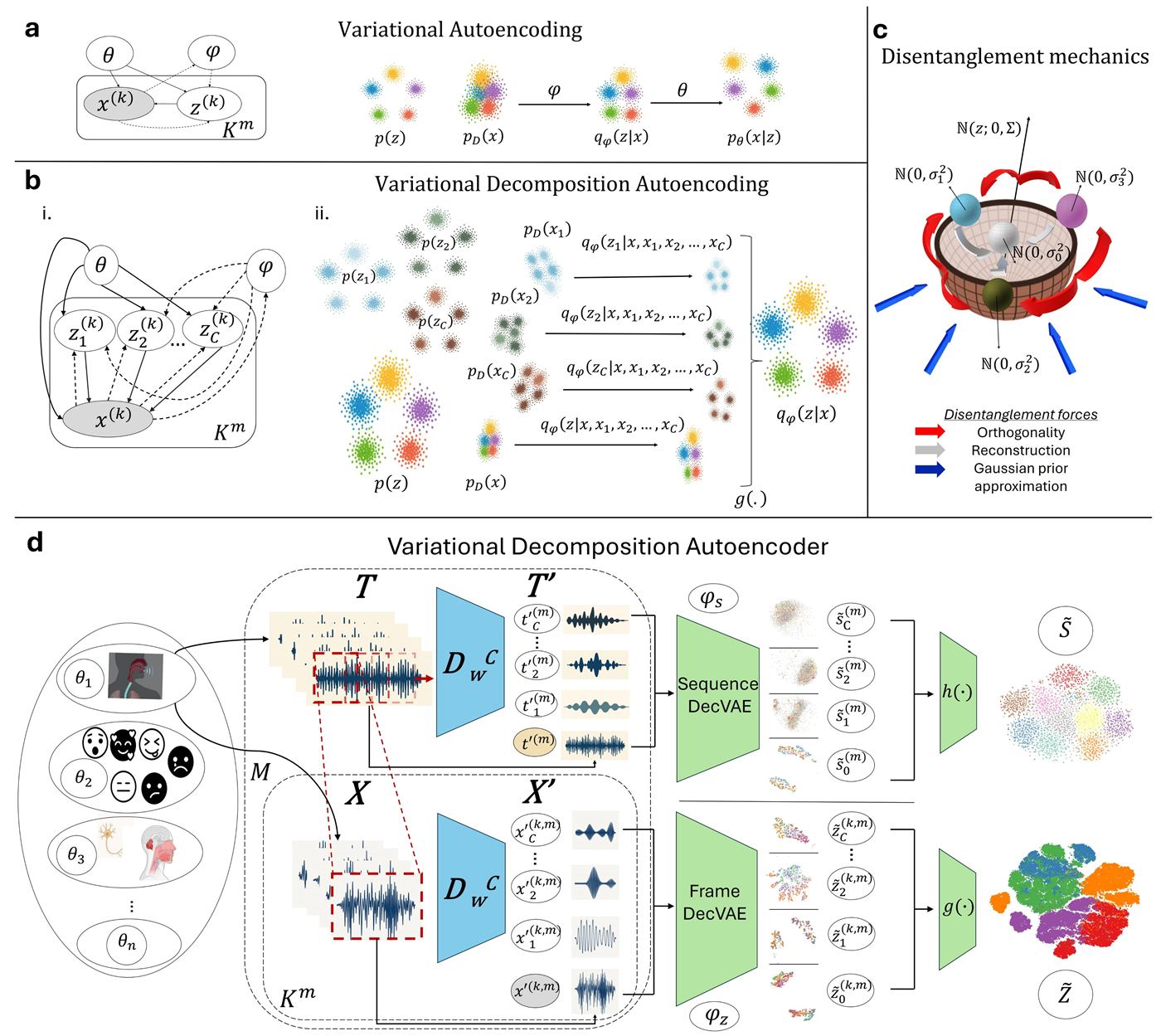
Integrating the dynamics of signal decomposition into variational autoencoders to improve disentanglement in representations. Self-supervised latent decomposition learns a disentangled representation by achieving equilibrium by contrasting fundamental components of a signal. (Demonstrated through applications in speech recognition, dysarthric speech and speech emotion recognition.)

DecVAE self-supervised unsupervised latent decomposition variational decomposition learning disentanglement structure

Self-Supervised Learning

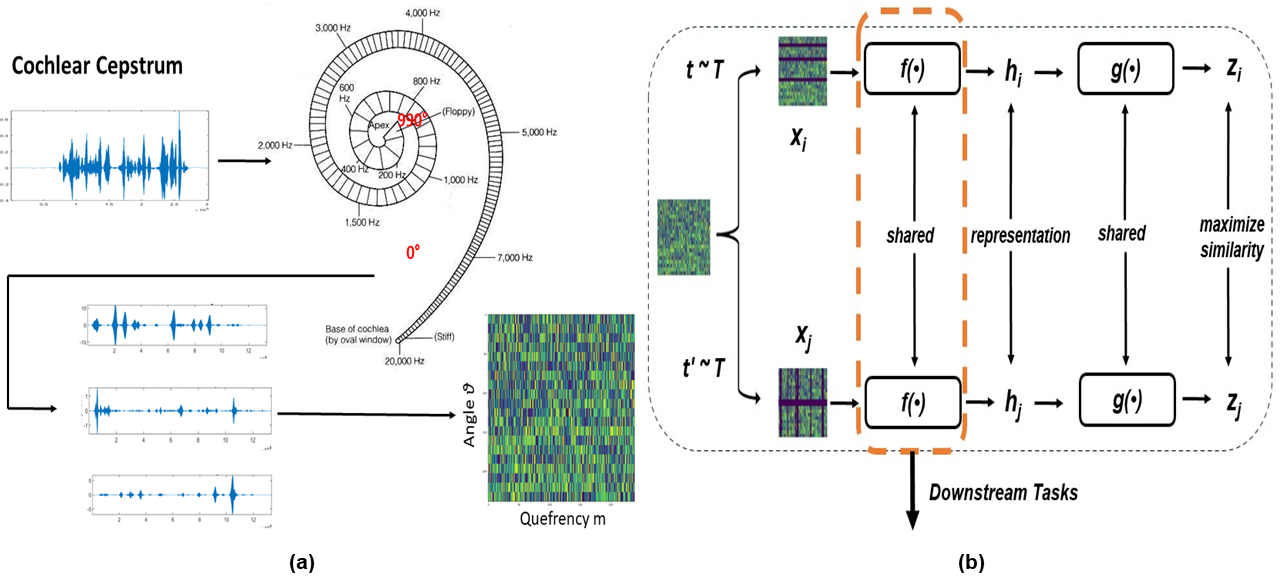
Integrating structural biases into self-supervised learning workflows, adapting existing successful workflows through signal processing - CochCepsAugment augmentation inspired from SpecAugment and SimCLR, inserting the decomposition operation as masking into wav2vec2.0, graph masking operations.

CochCepsAugment decomposition masking graph neural networks contrastive learning augmentations

Applications in Health Informatics

Utilizing representations as biomarkers for improved performance in healthcare informatics analysis - activity recognition, biometrics, affective computing, neurodegenerative diseases (Parkinson's, ALS) and motor/non-motor symptoms (tremor, dysarthria, gastrointestinal) detection, neurological disorders and comorbidities.

health informatics prediction EEG inertial sensors wearables smartphone data electrogastrogram migraine bioacoustics

Speech Recognition

Investigating speech at the lowest levels of spectral properties and combinations of formants that form speech units - simulating speech vowels, through artificial speakers to analyze disentanglement in speech data. Utilizing disentangled representations to interpret how separating these factors of variation contributes to classic speech recognition tasks i.e. speaker identification, phoneme recognition in real speech.

simulated speech speaker identification phoneme recognition speech decomposition

Signal processing & Representation Learning for Material Analysis

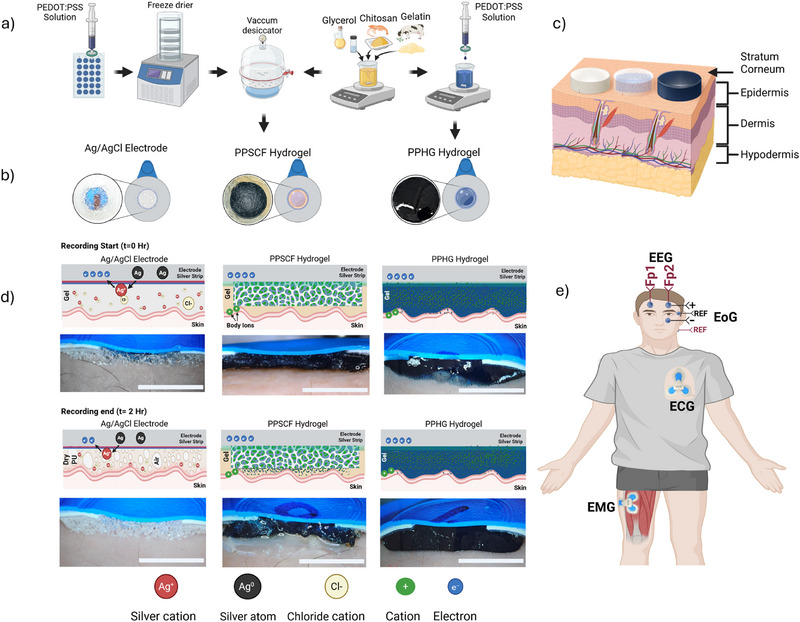
Comparing different sensing materials and isolating material signatures on physiological multi-lead waveforms - using heartbeat segmentation, unsupervised clustering, heartbeat and lead profiling per material.

ECG clustering unsupervised hydrogel sensor heartbeat profiling

Advanced Signal Processing Techniques for Disease Biomarkers Discovery

Transforming biomedical signals into informative representations by means of advanced DSP - spectral analysis, time-frequency analysis, higher order statistics, signal decomposition, multi-channel signals. Identifying patterns to use as biomarkers by means of feature engineering and machine learning workflows for enhanced disease prediction and characterization - in Parkinson's motor and non-motor symptoms, and comorbid migraine.

bispectrum functional connectivity brain networks EEG accelerometer electrogastrogram
Bio

Six years on connecting signal processing to representation learning.

  1. Aug 2025 — Jul 2026

    Graduate Visiting Researcher · University of Toronto

    Designed multi-modal self-supervised representation learning models addressing omni-modality and full-stack representations in wearable time series, at the Identity, Privacy and Security Institute under the supervision of Prof. Dimitrios Hatzinakos. Applied to activity recognition, biometric identification, and multi-modal wearable data synthesis.

  2. Aug 2022 — Jul 2026

    PhD, Biomedical Engineering · Khalifa University of Science and Technology

    Dissertation: "Structure-aware Self- and Unsupervised Representation Learning for Acoustic and Physiological Time Series," advised by Prof. Leontios J. Hadjileontiadis, Prof. Ahsan H. Khandoker, and Dr. Aamna Al Shehhi. Developed variational decomposition autoencoders, a framework for measuring disentanglement in time series by integrating signal processing priors as inductive biases.

  3. Sep 2020 — Jun 2022

    Research Assistant · Aristotle University of Thessaloniki

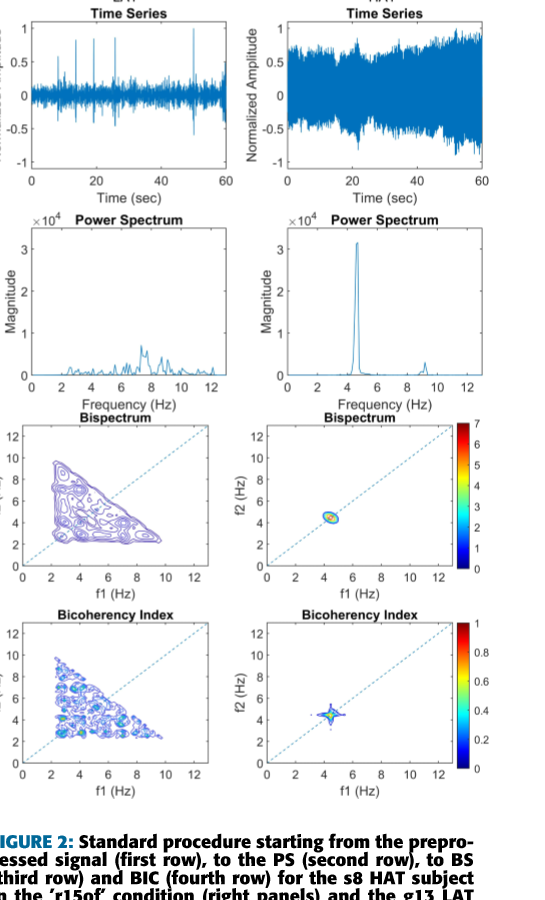
    Signal Processing and Biomedical Technology Unit (SPBTU), advised by Prof. Leontios J. Hadjileontiadis. Analyzed rest tremor accelerometer recordings from Parkinson's Disease patients using higher-order spectra and cepstral analysis, proposing new tremor characterization strategies with respect to levodopa and deep brain stimulation interventions.

  4. Sep 2016 — Apr 2022

    M.Sc. (Integrated), Electrical & Computer Engineering · Aristotle University of Thessaloniki

    Major in Telecommunications Engineering. Thesis: "Classification and Characterization of the Effect of Migraine through Functional Connectivity Characteristics," applied to EEG recordings from a multimorbid clinical sample, advised by Prof. Leontios J. Hadjileontiadis and Dr. Herbert F. Jelinek.

Updates

Recent news

Selected Publications

A few highlights — see below for the full record, or the live list on Google Scholar.

ARXIV 2026 Omni-modal decomposition autoencoder architecture diagram

Omni-modal Decomposition Autoencoders Learn Full-Stack Wearable Disentangled Representations

Ziogas, I.; Khazaei, E.; Taha, B.; AlShehhi, A.; Khandoker, A.H.; Hadjileontiadis, L.J.; Hatzinakos, D.

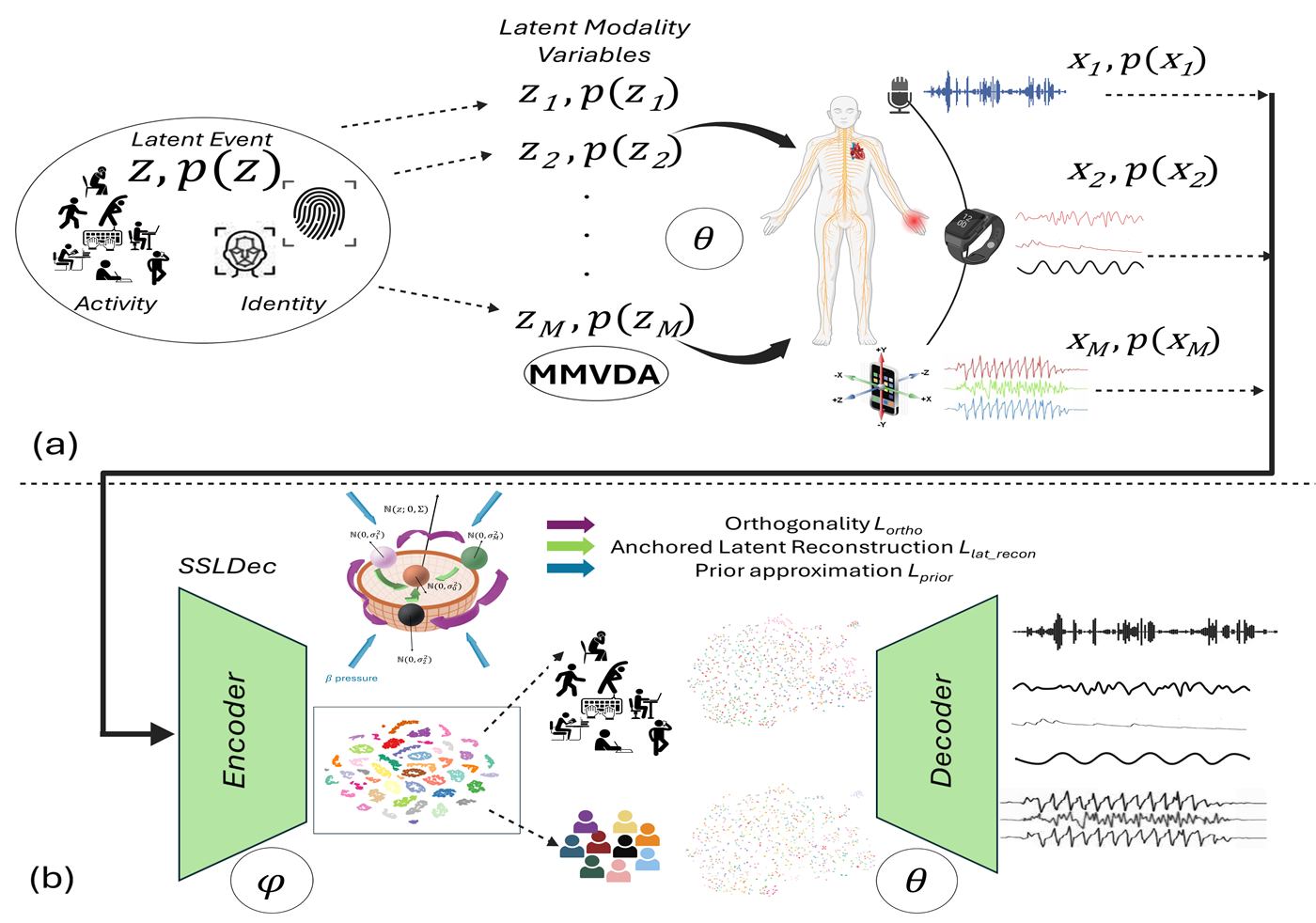
Omni-modal decomposition autoencoders that learn full-stack, disentangled representations across an arbitrarily large number of wearable channels and modalities, powered by self-supervised signal decomposition.

ARXIV 2026 Variational decomposition autoencoding figure

Variational Decomposition Autoencoding Improves Disentanglement of Latent Representations

Ziogas, I.; Khandoker, A.H.; AlShehhi, A.; Hadjileontiadis, L.J.

Disentangles basic speech concepts via self-supervised, signal-decomposition-inspired learning, with a theoretical and experimental framework for measuring disentanglement in time series.

Advanced Science, 2026 Conductive hydrogel electrode figure

Systematic Benchmarking of a Noise-Tolerant Conductive Hydrogel Electrode for Epidermal Bioelectronics

Alsaafeen, N.†; Ziogas, I.†; Alsaedi, S.; Alshehhi, M.; Almheiri, S.; Rehman, A.; Al Shehhi, K.; Saleh, H.; Khandoker, A.; Pitsalidis, C.; Khawaja, A. († co-first authorship)

Benchmarks a noise-tolerant conductive hydrogel electrode for epidermal bioelectronics, isolating material-specific signatures on physiological multi-lead waveforms via heartbeat segmentation and unsupervised clustering.

IEEE ICASSPW 2024 CochCeps-Augment method diagram

CochCeps-Augment: A Novel Self-Supervised Contrastive Learning Using Cochlear Cepstrum-based Masking for Speech Emotion Recognition

Ziogas, I.; Alfalahi, H.; Khandoker, A.H.; Hadjileontiadis, L.J.

A self-supervised contrastive augmentation strategy that masks cochlear-cepstrum signal decomposition components, inspired by SpecAugment and SimCLR, for speech emotion recognition.

IEEE Access, 2023 Bispectral analysis of Parkinsonian tremor figure

Bispectral Analysis of Parkinsonian Rest Tremor: New Characterization and Classification Insights Pre-/Post-DBS and Medication Treatment

Ziogas, I.†; Lamprou, C.†; Hadjileontiadis, L.J. († co-first authorship)

Applies higher-order spectral (bispectral) analysis to characterize and classify Parkinsonian rest tremor before and after deep brain stimulation and medication treatment.

IEEE ICASSP 2025 Self-supervised graph representation learning framework diagram

Self-Supervised Graph Representation Learning for In-the-Wild Wearable and Smartphone based Emotion Recognition

Ziogas, I.; Hadjileontiadis, L.J.; Khandoker, A.H.; AlShehhi, A.

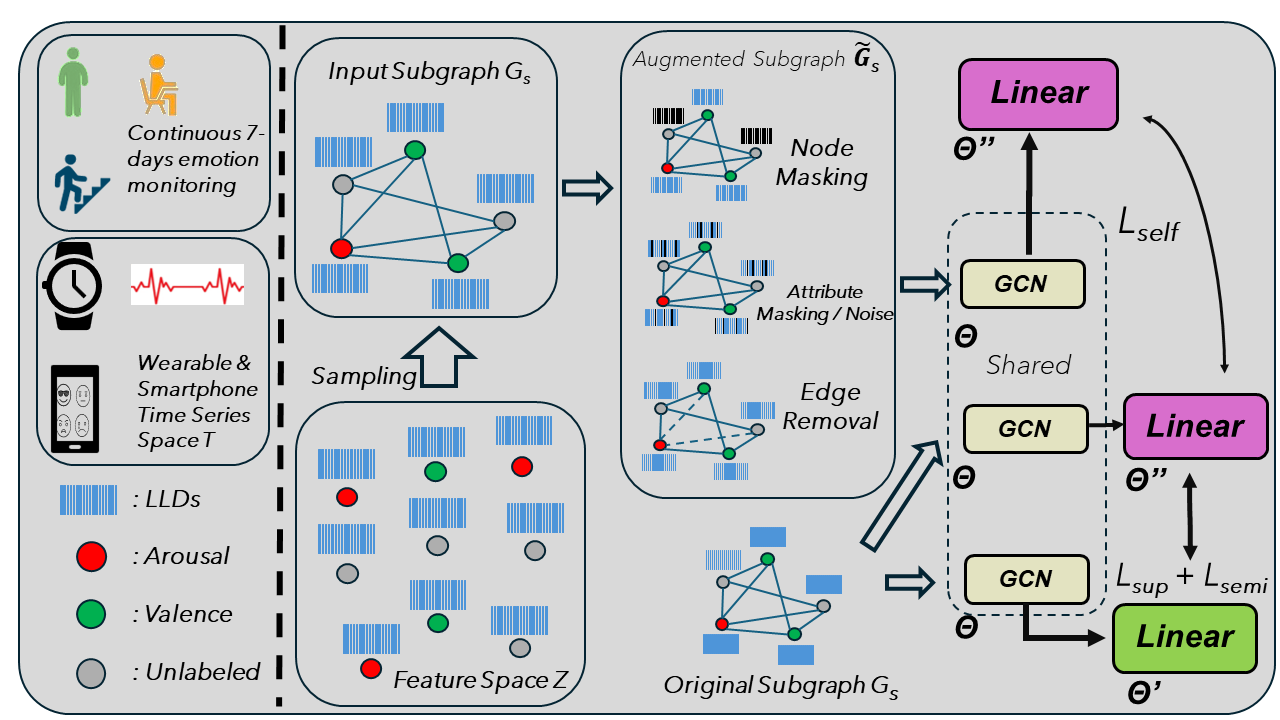
Casts in-the-wild wearable/smartphone emotion recognition as inductive graph node classification, training on sampled subgraphs with self-supervised masking and pseudo-labeling tasks to exploit unlabeled data. On the K-EmoPhone dataset, this matches or beats full-label supervised training while using only 20–25% of the labels, improving arousal and valence accuracy by 4.3% and 7.8% respectively.

Artificial Intelligence Review, 2025 Speech emotion recognition in conversations systematic review graphical abstract

Speech Emotion Recognition in Conversations Using Artificial Intelligence: A Systematic Review and Meta-Analysis

Alhussein, G.†; Ziogas, I.†; Saleem, S.†; Hadjileontiadis, L.J. († co-first authorship)

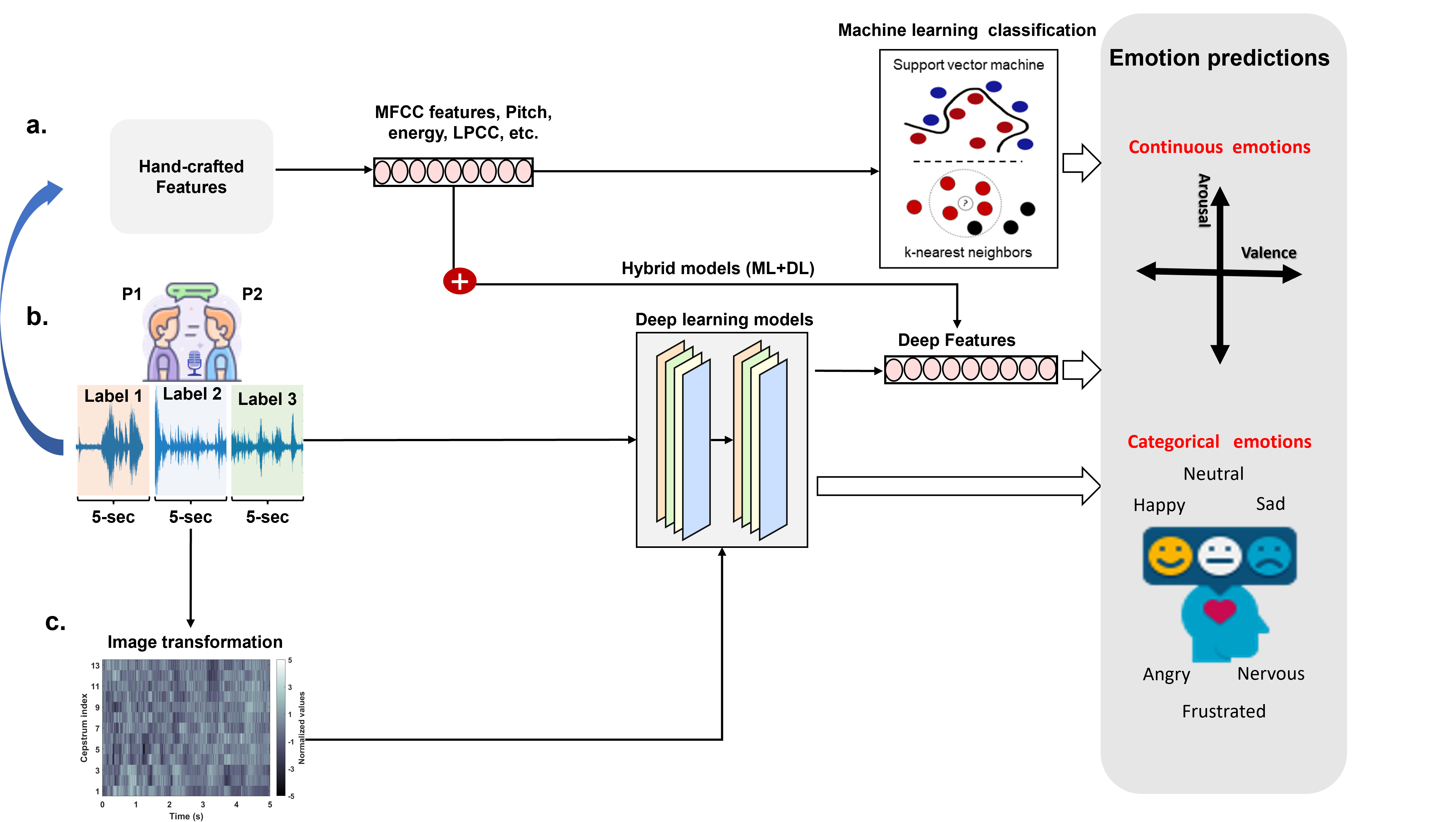
Systematically reviews speech emotion recognition in conversations (2010–2023), screening 1,932 records down to 51 studies for qualitative review and 27 for a meta-analysis of diagnostic test performance. Finds that unimodal speech significantly outperforms multimodal fusion and that deep features edge out hand-crafted ones, and closes with best-practice recommendations given widespread reporting and reproducibility gaps.

Published at

See all publications on Google Scholar
View all publications (full citations) ▾
  1. Ziogas, I.; Khazaei, E.; Taha, B.; AlShehhi, A.; Khandoker, A.H.; Hadjileontiadis, L.J.; Hatzinakos, D. "Omni-modal Decomposition Autoencoders Learn Full-Stack Wearable Disentangled Representations." Under review, IEEE Journal of Biomedical and Health Informatics, 2026.
  2. Ziogas, I.; Khandoker, A.H.; AlShehhi, A.; Hadjileontiadis, L.J. "Variational Decomposition Autoencoding Improves Disentanglement of Latent Representations." Under review, npj Artificial Intelligence, 2026.
  3. Alkhodari, M.; Ziogas, I.; Singh, J.; Grigolini, P.; Muschert, G.W.; Kusmartsev, F.; Jelinek, H.F. "Continuous Bidirectional Coupling of Heart Rate Variability and Emotions in Dyad Speaker-Listener Dynamics Reveals Unique Interpersonal Synchronization." Frontiers in Systems Neuroscience, 20, p.1802891, 2026.
  4. Alsaafeen, N.†; Ziogas, I.†; Alsaedi, S.; Alshehhi, M.; Almheiri, S.; Rehman, A.; Al Shehhi, K.; Saleh, H.; Khandoker, A.; Pitsalidis, C.; Khawaja, A. "Systematic Benchmarking of a Noise-Tolerant Conductive Hydrogel Electrode for Epidermal Bioelectronics." Advanced Science, 13(20), p.e15131, 2026. (†: co-first authorship)
  5. Alkhodari, M.; Ziogas, I.; Singh, J.; Grigolini, P.; Muschert, G.; Kusmartsev, F.; Jelinek, H.F. "Bidirectional Coupling of Physiology and Emotions Reveals Unique Speaker–Listener Dynamics." Social Cognitive and Affective Neuroscience, 21(1), nsag019, 2026.
  6. Bushara, F.; Ziogas, I.; Kumar, R.; Elkaffas, R.A.; Garg, A.; Samad, Y.A.; Hadjileontiadis, L.J.; Tardy, B.L.; Pitsalidis, C. "Bioderived and All-Solution-Processed Tribolayer Component Enables Adaptive Design of Flexible Nanocellulosic Triboelectric Nanogenerators." Journal of Materials Chemistry A, 2026.
  7. Ganiti-Roumeliotou, E.; Apostolidis, G.; Ziogas, I.; Dias, S.B.; Hadjileontiadis, L.J. "Impact of Dynamic Serious Game Environments on Multimodal Physiological Signals: A Multivariate Swarm-Prey Approach." IEEE EMBC, pp. 1-7, 2025.
  8. Alhussein, G.; Alkhodari, M.; Ziogas, I.; Lamprou, C.; Khandoker, A.H.; Hadjileontiadis, L.J. "Exploring Emotional Climate Recognition in Peer Conversations through Bispectral Features and Affect Dynamics." Computer Methods and Programs in Biomedicine, 265, 108695, 2025.
  9. Alhussein, G.†; Ziogas, I.†; Saleem, S.†; Hadjileontiadis, L.J. "Speech Emotion Recognition in Conversations Using Artificial Intelligence: A Systematic Review and Meta-Analysis." Artificial Intelligence Review, 58(7):198, 2025. (†: co-first authorship)
  10. Ziogas, I.; Hadjileontiadis, L.J.; Khandoker, A.H.; AlShehhi, A. "Self-Supervised Graph Representation Learning for In-the-Wild Wearable and Smartphone based Emotion Recognition." IEEE ICASSP, 2025.
  11. Ganiti-Roumeliotou, E.; Ziogas, I.; Dias, S.B.; Alhussein, G.; Jelinek, H.F.; Hadjileontiadis, L.J. "Beyond the Game: Multimodal Emotion Recognition Before, During, and After Gameplay." IEEE EMBC, 2024.
  12. Ziogas, I.; Alfalahi, H.; Khandoker, A.H.; Hadjileontiadis, L.J. "CochCeps-Augment: A Novel Self-Supervised Contrastive Learning Using Cochlear Cepstrum-based Masking for Speech Emotion Recognition." IEEE ICASSPW, 2024.
  13. Ziogas, I.†; Lamprou, C.†; Hadjileontiadis, L.J. "Bispectral Analysis of Parkinsonian Rest Tremor: New Characterization and Classification Insights Pre-/Post-DBS and Medication Treatment." IEEE Access, PP(99):1-1, 2023. (†: co-first authorship)
  14. Ziogas, I.†; Leta, V.†; Lamprou, C.; Trivedi, D.; Zinzalias, P.; Staunton, J.; Odin, P.; Chaudhuri, K.R.; Charisis, V.; Hadjidimitriou, S.; Stouraitis, T.; Hadjileontiadis, L.J. "Dynamic Monitoring of Probiotics Effect in Parkinson's Disease Patients via Swarm Decomposition and Bispectral Analysis of Electrogastrograms." IEEE EMBC, 2023. (†: co-first authorship)
  15. Ganiti-Roumeliotou, E.†; Ziogas, I.†; Lamprou, C.†; Alhussein, G.; Alfalahi, H.; AlShehhi, A.; Dias, S.B.; Jelinek, H.F.; Stouraitis, T.; Hadjileontiadis, L.J. "Classification of Children with ADHD through Task-related EEG Recordings via Swarm-Decomposition-based Phase Locking Value." IEEE EMBC, 2023. (†: co-first authorship)
  16. Alhussein, G.; Alkhodari, M.; Lamprou, C.; Ziogas, I.; Ganiti-Roumeliotou, E.; Khandoker, A.H.; Hadjileontiadis, L.J. "Emotional Climate Recognition in Conversations using Peers' Speech-based Bispectral Features and Affect Dynamics." IEEE EMBC, 2023.
  17. Alfalahi, H.; AlShehhi, A.; Lamprou, C.; Ziogas, I.; Ganiti-Roumeliotou, E.; Khandoker, A.H.; Hadjileontiadis, L.J. "Parkinsonian Tremor Detection with Compact Convolutional Transformer from Bispectrum Representation of tri-Axial Accelerometer Signals." IEEE EMBC, 2023.
  18. Lamprou, C.†; Ziogas, I.†; Ganiti-Roumeliotou, E.†; Alfalahi, H.; Alhussein, G.; AlShehhi, A.; Hadjileontiadis, L.J. "Deep Bispectral Image Analysis for IMU-based Parkinsonian Tremor Detection." IEEE ISBI, 2023. (†: co-first authorship)

Service

Mentoring, teaching and reviewing experience.

Jun 2025 — Present

MSc Thesis Mentor · AUTh, Signal Processing & Biotechnology Unit

Co-supervising M. N. Forou and A. Pappa on a smartphone-based serious game platform for psoriatic arthritis patients, from thesis conception through signal processing and machine learning guidance for grip-strength and gesture recognition.

Jun 2025 — Present

MSc Thesis Mentor · AUTh, Signal Processing & Biotechnology Unit

Co-supervising K. Tsokkos on affective game design with emotionally adaptive avatars, using short-term multimodal physiological signal analysis and graph neural network modeling.

Jun 2025 — Jun 2026

MSc Thesis Mentor · AUTh, Signal Processing & Biotechnology Unit

Co-supervised M. Dimou on multimodal autoencoder models for a sensor-less physiological monitoring tool, exploring cross-modal retrieval and generation between signal and game-log recordings.

Jan 2023 — Jun 2026

Teaching Assistant, Fundamentals of Biosignal Processing (BME 352) · Khalifa University

Aug 2023 — Dec 2024

Teaching Assistant, Biomedical Circuits and Signals (BME 351) · Khalifa University

Jan 2023 — Jun 2024

Teaching Assistant, Biosensors: Fundamentals and Analysis (BME 641, M.Sc.) · Khalifa University

May 2020 — Jun 2021

IEEE-EMBS Student Chapter Council Member: Secretary General · Aristotle University of Thessaloniki (AUTh)

Organized chapter recruitment events to raise interest in the biomedical engineering field, and attracted 40 new chapter members. Collaborated with university faculty and faculty from other institutions for the organization of biomedical engineering events, talks and workshops.

May 2020 — Jun 2021

IEEE-EMBS Student Chapter: Project Manager · Aristotle University of Thessaloniki (AUTh)

Managed and organized the student chapter's undergraduate research project "Serious Games for Anxiety", running a group of 20 chapter members and organizing related activities: within-chapter workshops on biomedical signal processing techniques for ECG, GSR signals and machine learning techniques for analyzing biomedical data; literature review of state-of-the-art interventions for anxiety management and serious game design.

2024, 2025, 2026

Peer Reviewer, Journals & Conferences

Reviewed 13 articles across five venues: Parkinsonism and Related Disorders (1), IEEE Transactions on Communications (1), IEEE-EMBS International Conference on Biomedical and Health Informatics (4), IEEE Sensors Conference (6), and IEEE Biomedical Circuits and Systems Conference (1).

Get In Touch

Open to research collaborations and hiring opportunities. Interested in representation learning, SSL, signal processing, combinations of the two, or challenging problems in biomedical engineering? Let's get in touch!